Articles
-
Ilford Arrival Have Your Say- Public Consultation Event 18 July 2026
Share Ilford Arrival Have Your Say- Public Consultation Event 18 July 2026 on Facebook Share Ilford Arrival Have Your Say- Public Consultation Event 18 July 2026 on X (formerly Twitter) Share Ilford Arrival Have Your Say- Public Consultation Event 18 July 2026 on Linkedin Email Ilford Arrival Have Your Say- Public Consultation Event 18 July 2026 linkWe're in the stages of gathering feedback on the first phase of Ilford Arrival, ahead of our planning application. This application will refer to the first two physical interventions detailed in the Ilford Arrival Spatial Framework; the new pocket park and bridge crossing, and the new river pathways West and South.
We are hosting an Ilford Arrival Open Day in Redbridge Town Hall on Saturday 18th July 2026. The event will run from 10:30am-4:30pm.
The public are welcome to drop-in and view the design proposals, speak to members of our team, and fill out a consultation survey. This information will be passed on to our design team, who will review comments and adjust design proposals as necessary, before we submit our planning application.
For those who are unable to make it, we will also be running the questionnaire online, until Mon 27th July 2026. This makes sure that everyone gets a chance to contribute! If you would like to fill out the survey, please click this link.
If you would like to see a digital copy of the boards that were on display at the consultation, please click this link.
We look forward to seeing you on the 18th of July!

-
London Festival of Architecture Connecting Ilford: The River Roding and Community Empowerment- 27 June 2026
Share London Festival of Architecture Connecting Ilford: The River Roding and Community Empowerment- 27 June 2026 on Facebook Share London Festival of Architecture Connecting Ilford: The River Roding and Community Empowerment- 27 June 2026 on X (formerly Twitter) Share London Festival of Architecture Connecting Ilford: The River Roding and Community Empowerment- 27 June 2026 on Linkedin Email London Festival of Architecture Connecting Ilford: The River Roding and Community Empowerment- 27 June 2026 link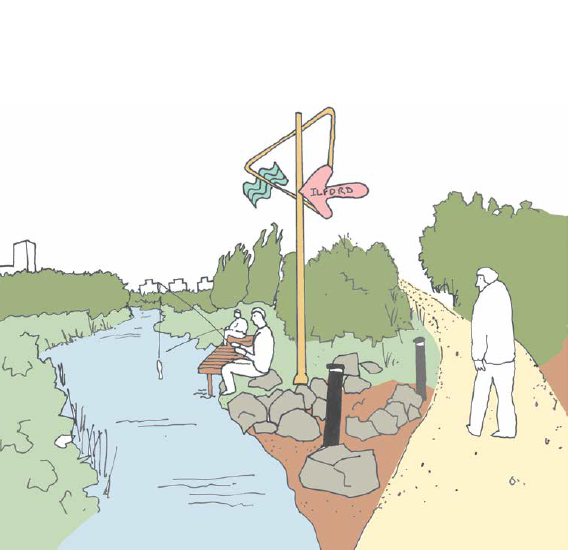
The London Festival of Architecture is coming to Ilford!
The annual festival runs from 1 June to 30 June 2026 and celebrates architecture and city-making across London. This year's theme is '#Belonging'.
Join us on the 27th of June 2026 for a guided walking tour through the emerging Ilford Arrival sites; new pocket park, pedestrian and cycle bridge, and new river paths. This tour explores how opportunities to activate connections to the River Roding with new public realm sites will build wider opportunities for town centre improvements and growth.
Explore how community voices are shaping more inclusive public and discuss how local knowledge can influence briefs, design decisions and long-term stewardship. Gain an insight into the role of community-led processes in regeneration, while experiencing how emerging spaces in Ilford are beginning to reconnect people, place and landscape.
There are two sessions to choose from, 10am -12pm or 2pm-4pm, meeting at York Mews, the secondary entrance at Ilford Station on the Elizabeth Line. For more information click the link: Connecting Ilford: The River Roding and Community Empowerment - London Festival of Architecture.
Tickets are free but limited, so please book early here.
Accessibility: Please note that due to uneven ground and no resting points, this walk isn't currently accessible to those with mobility needs. We're sorry for this, and are looking at how to improve access to the site as it develops, acknowledging that the future pocket park and bridge will be fully accessible to all.
Please note: This event has been organised by Diverse Dialogues, who have been commissioned to Lead the Ilford Arrival Community Engagement process. Redbridge Council is not responsible for the management of this event.
-
Designing Better Outdoor Lighting
Share Designing Better Outdoor Lighting on Facebook Share Designing Better Outdoor Lighting on X (formerly Twitter) Share Designing Better Outdoor Lighting on Linkedin Email Designing Better Outdoor Lighting link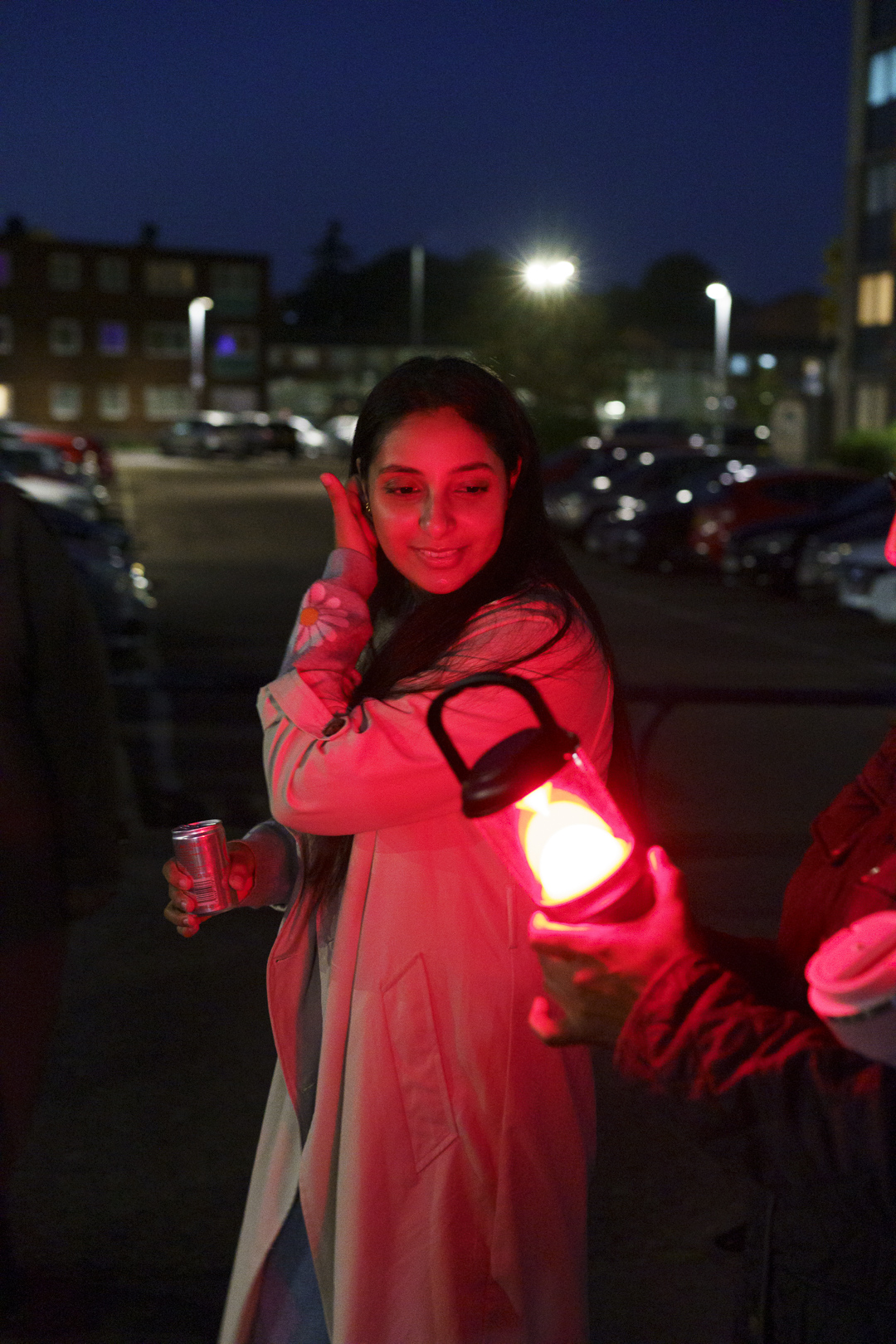
When we ask ourselves how we would improve our public spaces, our minds often gravitate towards lighting. We usually think that the more well-lit, the better. Usually, we don’t go further than this. Lighting has been proven to impact our mood, local wildlife, not just crime and public safety.
In September 2025, our Co-clients and Co-creators had a chance to see what this looked like in practice. They attended a workshop delivered by specialist lighting designer and Mayor’s Design Advocate, Satu Streatfield, to learn all about different types of lighting that could be implemented on the bridge, throughout the pocket park and the river pathways.
Satu introduced the group to lighting theory and talked them through the importance of lighting placement and how light is used in design.
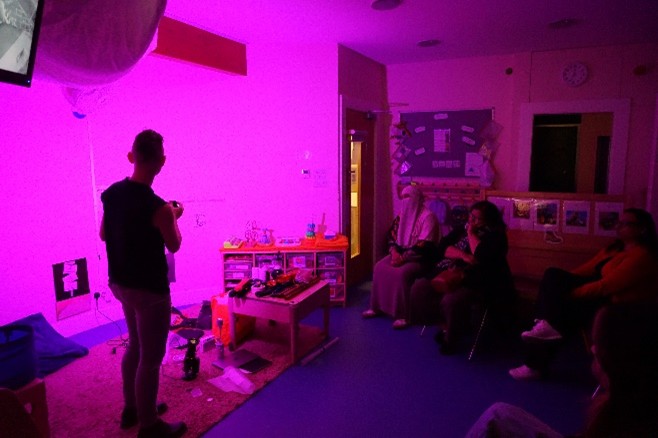
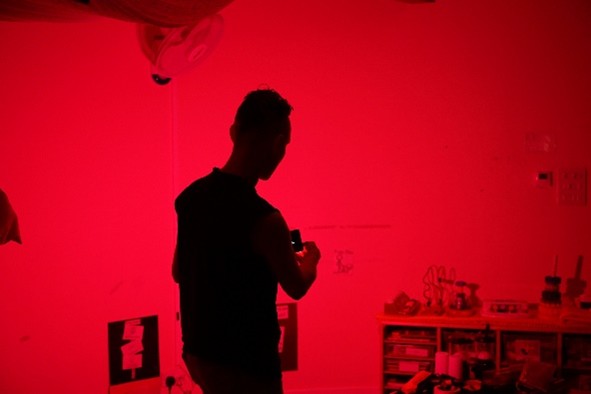
Our co-clients then visited Harts Lane Park in Barking, which is a little further along the River Roding. The site has similar features and limitations as the pocket park site, so it was an ideal space to test different lighting options. The group experimented with portable lamps at the playground and bridge to experience the impact that lighting can have.
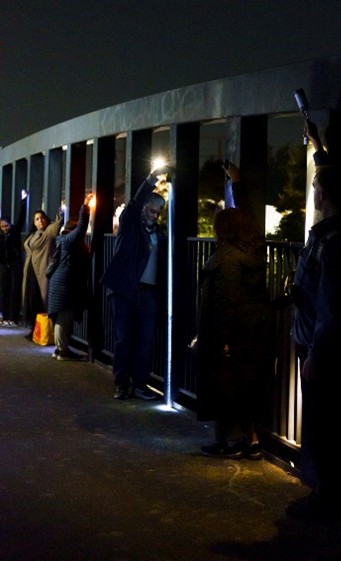 As Briefing Principle 5 is “Well-Lit Environment”, the lighting on the site should be varied and should have positive impacts on safety, nature and overall atmosphere.
 After the workshop and site visit, we determined that the group felt strongly about the following:
Use After Dark – the co-creator team considered the use of flexible lighting options responding to time of day, season and use of space. The possibility of solar powered lighting, and desire to respect and protect local biodiversity was brought up.
Quality of Light – The large majority of co-clients and co-creators preferred warmer tones of light (3000K and lower) on surfaces and skin. There was a preference for the warm amber coloured light in lanterns with variable colour temperature.
Seeing Each Other – Co-clients and Co-creators expressed a desire for good vertical illumination of people to support safety and socialising. This would allow for the ability to see each other’s faces in gathering and seating areas and make it easier to lip-read. Warm, soft vertical illumination that complements the melanin pigment in various skin tones so that black and brown skin is visible and does not appear pale or grey tinted. Good visibility of people at the opposite end of the bridge, a variety of lighting scales and intensities around benches to give people options for seating.
The results of the visit will be used to inform the RIBA Stage 3 design process, which is when the project’s design will form evolve into a detailed plan to secure a planning permission. This stage makes sure that all of the great ideas we’ve developed inform the designs that will be used to secure a builder for implementation.
Have you noticed how outdoor lighting impacts your experience in public spaces?
Do you have any comments on what our Co-Clients and Co-Creators have suggested?
Is there anything else that you think should be considered as the lighting design evolves?
-
Engaging Women and Girls
Share Engaging Women and Girls on Facebook Share Engaging Women and Girls on X (formerly Twitter) Share Engaging Women and Girls on Linkedin Email Engaging Women and Girls link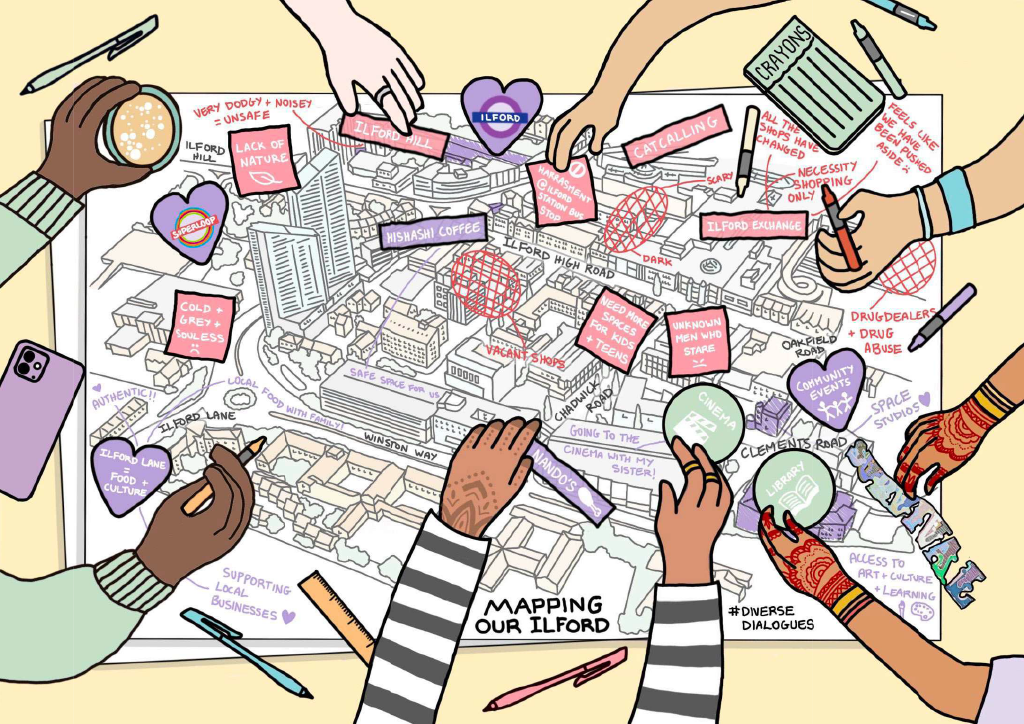
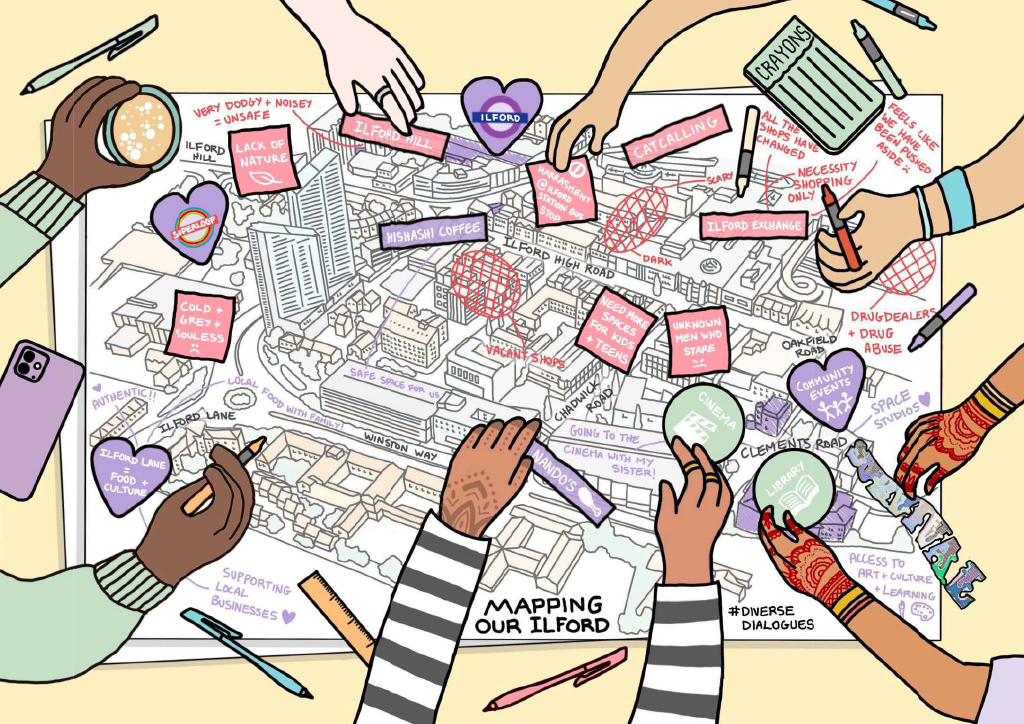 Illustration - PatchaWorks & Diverse Dialogues. The Ilford Arrival Project is being funded by the Greater London Authority (GLA) as part of the Civic Partnership Programme. One of the programme's objectives is strengthening representation and authorship in physical regeneration.
As part of our approach, we have been working with Diverse Dialogues to empower young women and girls in our Co-Client team to shape the world around them.
Why Young Women and Girls?
The Ilford Arrival Spatial Framework identified young women and girls as marginalised voices in decision-making around public space, which has lasting effects. A 2020 survey showed that in London, 74% of women respondents felt worried for their safety, and we know that this is echoed similarly within the Borough. The Safer Redbridge Strategy 2022-2026 details that Redbridge is committed to making public spaces safer for women and girls.
We want women to increase their use of public spaces like parks and green spaces, so involving them as early as possible in the development of Ilford Arrival Phase 1- the pocket park, bridge crossing and river pathway, ensures that we can understand how to make young women and girls feel safe enough to use these spaces regularly.
Co-Clienting and Our Co-Client Team
Co-clienting is an engagement approach that allows residents to be actively involved in the design process. Co-clients have an equal say in how they want the space to look, and how it can reflect their needs.
The Co-Client team is made up of nine young women and girls who have a lived experience of unequal access to space in and around Ilford, who were aged 16-25 years old at the beginning of the engagement process. Details of the selection process and early engagement work can be seen in the Ilford, Be Heard Report. We are conducting long-term engagement with our co-client team as they feed their input into the first phase of the Ilford Arrival project, to ensure that their participation has a lasting impact.
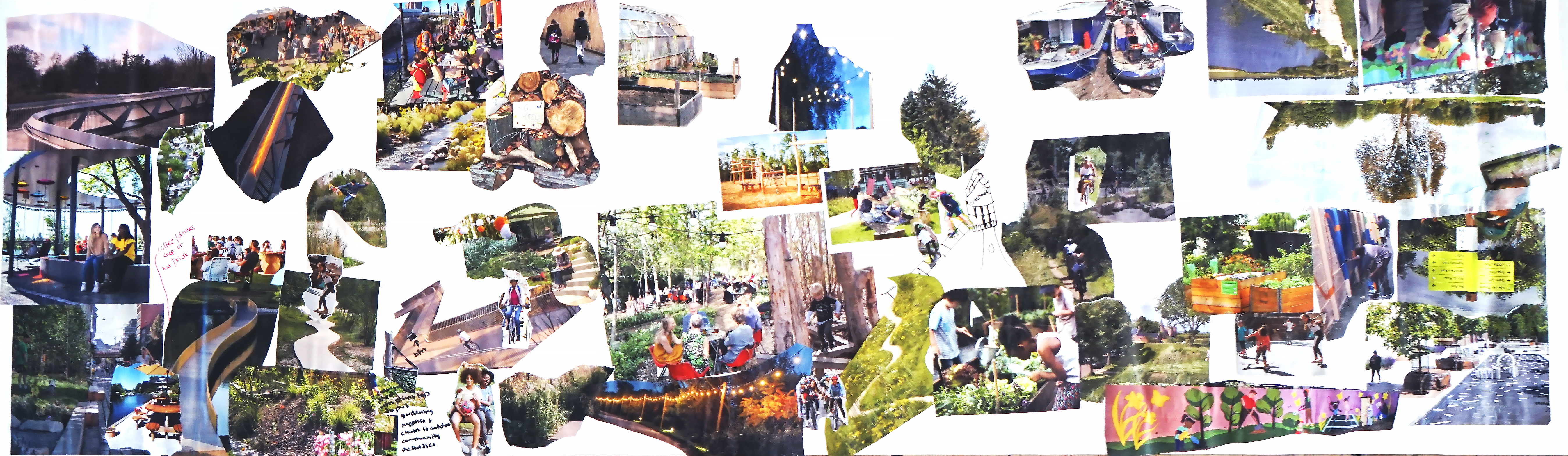 Co-Client Team Collage produced in June 2025.
 Co-Client Briefing Principles
Between April – August 2025 the Co-Client team, together with Diverse Dialogues, authored the Briefing Principles for Ilford Arrival Phase 1 below:
1. Safety First - The pocket park, bridge and river path must address safety for all. Openness, visibility, and activation are important, as well as formal security measures. There should be no blind spots, areas to hide, and direct view of the entrances and exits should help visitors know who is coming and leaving. Careful consideration should be given to how activity is designed and managed to ensure neighbouring properties remain secure.
2. People Want to be Here – The pocket park should actively encourage people to spend time, with comfortable and sociable seating types that welcome different bodies, needs and ways of being in public space. Seating should support both group and solo use, allow for activities like eating, chatting, or watching the world go by, and, where possible, double up with planting or play functions to bring variety and delight.
3. Somewhere for Everyone – The pocket park should feel welcoming and safe for all of Ilford’s diverse community. It should be an inviting, clean and comfortable space, both physically and mentally, for rest and play. The pocket park should offer a range of activities and consider the needs of children, residents and the wider community.
4. Quality Materials Matter – Materials should support comfort, durability, accessibility and should be of high quality. Textures and colours should be explored with the community and maintenance measures should be realistic of the budget.
5. A Well-lit Environment - Lighting should support the safety, atmosphere and surrounding nature, and help all areas be usable in darker hours. Levels of brightness and variety are important to create playful, inviting, and unique spaces.
6. Connection to Nature - The pocket park should be a connection between people and nature. Promoting collective care, the pocket park should be a social space for community building with beauty, activity, and wildlife. Planting must be purposeful and work with the environment to include shade, allergy-safe and low maintenance. Planting must not create overgrown areas that cause a safety risk.
7. Playful and Sensory Places - Playfulness and sensory experiences should be embedded into the landscape for people of all ages. Design features should be inclusive, encouraging imagination, interaction, joy, exploration, and creativity. Children, young and elderly people should see their needs reflected in the space and be supported to move freely, safely, and confidently occupy throughout.
8. Inclusive Learning - The spaces should be multifunctional and encourage informal learning for all. Learning should be visible and accessible through hands-on activities, sharing knowledge and community creativity. Learning should be all year round, and the park’s architecture should reflect this. Spaces for young and older generations, families, and communities to engage with nature, heritage, performance, and communication.
9. A Representative Space - The pocket park and bridge should showcase and reflect Ilford’s historic past and cultural present, as symbols of the community. Opportunities for signage to and from these new landmarks should be inclusive and consider a multilingual approach.
The briefing principles are embedded in the design brief for Ilford Arrival and can be used for the Co-client team to appraise the project further down the line.
We are also engaging with the wider Community Co-Creator group, local schools and neighbours and residents throughout the process. Be sure to check the Let's Talk Redbridge page for more updates soon.
-
Ilford Design Festival -13 September 2025
Share Ilford Design Festival -13 September 2025 on Facebook Share Ilford Design Festival -13 September 2025 on X (formerly Twitter) Share Ilford Design Festival -13 September 2025 on Linkedin Email Ilford Design Festival -13 September 2025 link
Join our FREE event on Saturday 13 September at Highlands Primary School (Highlands Gardens, Ilford IG1 3LE.
Come and discover how we are reconnecting the River Roding to Ilford's Town Centre and help us develop new designs for public spaces.
Find out more and sign up via Eventbrite
How to join in:
Morning Session:
10am-12:30pm Young People and Families (drop-in)
Fun and interactive activities to get children and young people (aged 2-16 years old) and parents thinking about how public spaces in Ilford can better engage future generations.
We will be hosting creative activities with model making, drawing, as well as sharing more formal information about the project for parents.
Afternoon Session:
2pm-4:30pm An Ilford for Everyone (drop-in)
We will be hosting workshops to get you exploring our current thinking for a new pocket park, street furniture, a new pedestrian bridge, urban room, River Roding path, cycle infrastructure and much more.