
Designing Better Outdoor Lighting
When we ask ourselves how we would improve our public spaces, our minds often gravitate towards lighting. We usually think that the more well-lit, the better. Usually, we don’t go further than this. Lighting has been proven to impact our mood, local wildlife, not just crime and public safety.
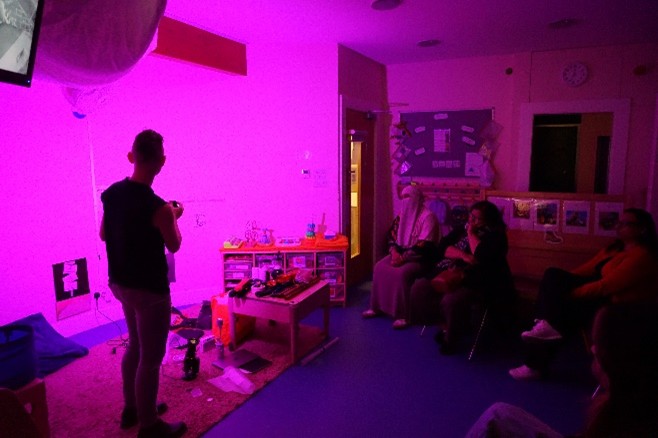
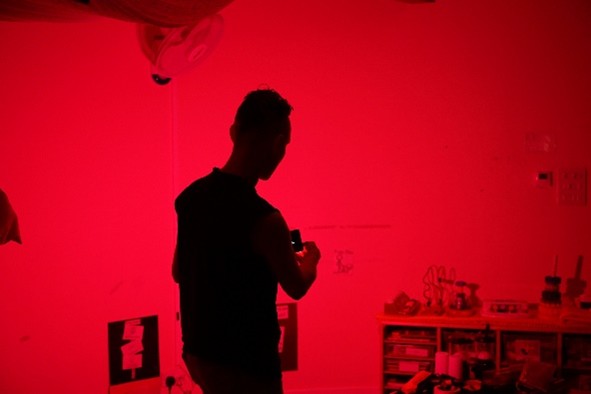
In September 2025, our Co-clients and Co-creators had a chance to see what this looked like in practice. They attended a workshop delivered by specialist lighting designer and Mayor’s Design Advocate, Satu Streatfield, to learn all about different types of lighting that could be implemented on the bridge, throughout the pocket park and the river pathways.
Satu introduced the group to lighting theory and talked them through the importance of lighting placement and how light is used in design.
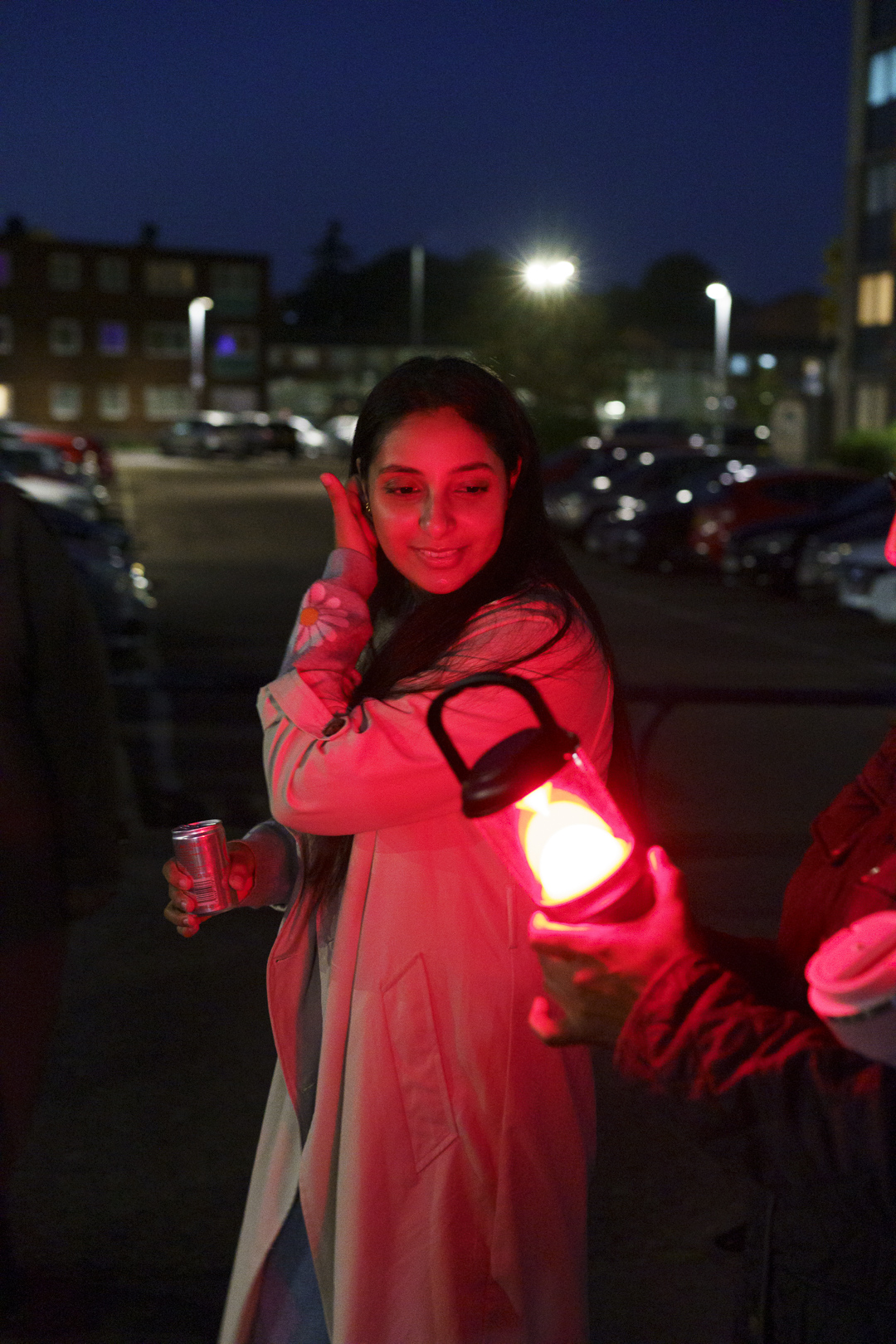
Our co-clients then visited Harts Lane Park in Barking, which is a little further along the River Roding. The site has similar features and limitations as the pocket park site, so it was an ideal space to test different lighting options. The group experimented with portable lamps at the playground and bridge to experience the impact that lighting can have.
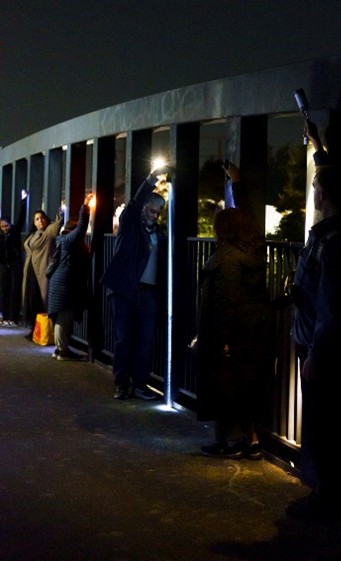 As Briefing Principle 5 is “Well-Lit Environment”, the lighting on the site should be varied and should have positive impacts on safety, nature and overall atmosphere.
 After the workshop and site visit, we determined that the group felt strongly about the following:
Use After Dark – the co-creator team considered the use of flexible lighting options responding to time of day, season and use of space. The possibility of solar powered lighting, and desire to respect and protect local biodiversity was brought up.
Quality of Light – The large majority of co-clients and co-creators preferred warmer tones of light (3000K and lower) on surfaces and skin. There was a preference for the warm amber coloured light in lanterns with variable colour temperature.
Seeing Each Other – Co-clients and Co-creators expressed a desire for good vertical illumination of people to support safety and socialising. This would allow for the ability to see each other’s faces in gathering and seating areas and make it easier to lip-read. Warm, soft vertical illumination that complements the melanin pigment in various skin tones so that black and brown skin is visible and does not appear pale or grey tinted. Good visibility of people at the opposite end of the bridge, a variety of lighting scales and intensities around benches to give people options for seating.
The results of the visit will be used to inform the RIBA Stage 3 design process, which is when the project’s design will form evolve into a detailed plan to secure a planning permission. This stage makes sure that all of the great ideas we’ve developed inform the designs that will be used to secure a builder for implementation.
Have you noticed how outdoor lighting impacts your experience in public spaces?
Do you have any comments on what our Co-Clients and Co-Creators have suggested?
Is there anything else that you think should be considered as the lighting design evolves?

Thank you for your contribution!
Help us reach out to more people in the community
Share this with family and friends